By Paulo Coelho
In the Mojave desert, one often comes across those famous ghost towns that were built around the gold mines. They were abandoned when all the gold had been mined out. They had served their purpose and there was no reason for anyone to go on living there.
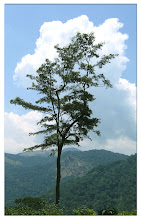
When we walk through a forest, we see trees which, once they have served their purpose, have fallen. However, unlike ghost towns, their fall has opened up space for light to penetrate, they have enriched the soil and their trunks are covered in new vegetation.
Our old age will depend on the way we have lived. We can either end up like a ghost town or like a generous tree, which continues to be important even after its fall.
Showing posts with label Paulo Coelho. Show all posts
Showing posts with label Paulo Coelho. Show all posts
Trees and towns
Labels: Paulo Coelho , Town , Tree
The giant tree
By Paulo Coelho
A carpenter and his apprentices were travelling through the province of Qi in search of building materials. They saw a giant tree; five men all holding hands could not encompass its girth, and its crown reached almost to the clouds.
‘Let’s not waste our time with this tree,’ said the master carpenter. ‘It would take us for ever to cut it down. If we wanted to make a ship out of that heavy trunk, the ship would sink. If we tried to use it to build a roof, the walls would have to be specially reinforced.’
The group continued on its way. One of the apprentices remarked:
‘Such a big tree and no use to anyone!’
‘That’s where you’re wrong,’ said the master carpenter. ‘The tree was true to its own destiny. If it had been like all the others, we would have cut it down. But because it had the courage to be different, it will remain alive and strong for a long time yet.’
Labels: Different , Paulo Coelho , Tree
Emptying the cup
By Paulo Coelho
A university professor went to visit a famous Zen master in Kyoto, in search of knowledge. While the monk served tea, the professor commented exercises, analyzed writings, interpreted stories and traditions, and deliberated on the ancient processes of meditation. He did everything to impress his host, in the hopes that he might be accepted as a disciple.
As he spoke, the monk continued to fill his cup, until it overflowed, and tea began to flow across the whole table.
- What are you doing? Can’t you see the cup is full, and that nothing more will fit in it?
- Your soul is like this cup - replied the master. - How can I teach you the true art of Zen Buddhism, if it is already filled with theories?
Labels: Emptying the cup , Paulo Coelho
The male monkey and the female monkey have an argument
By Paulo Coelho
The male monkey and the female monkey were sitting on the branch of a tree watching the sunset. At one point, she said:
‘What makes the sky change colour when the sun reaches the horizon?’
‘If we tried to explain everything, we wouldn’t be able to live,’ replied the male monkey.
‘Just sit quietly and let this romantic sunset fill our hearts with gladness.’
The female monkey grew angry.
‘You’re so primitive and superstitious. You’re not interested in logic any more, you just want to enjoy life.’
At that moment, a centipede happened to be walking past.
‘Centipede!’ called the male monkey. ‘How do you manage to move all those legs of yours in such perfect harmony?’
‘I’ve never really thought about it,’ came the reply.
‘Well, think about it! My wife would like an explanation!’
The centipede looked at its legs and began:
‘Well…first I move this muscle, no, no I don’t, first, I have to sway my body in this direction…’
The centipede spent half an hour trying to explain how it moved its legs, and the harder it tried, the more confused it became. Wanting to continue on its way, it found it could no longer walk.
‘See what you’ve done?’ it cried out in despair. ‘In my eagerness to explain how I work, I’ve forgotten how to move.’
‘Now do you see what happens when someone tries to explain everything?’ said the male monkey, turning to enjoy the sunset in silence.
Labels: Centipede , Explanation , monkey , Paulo Coelho , Sunset
Teaching the horse to fly
By Paulo Coelho
Let us divide the word ‘preoccupation’ into two parts - pre-occupation, that is, occupying your mind with something before it actually happens. This is what worrying is: trying to resolve problems that have not even had time to appear; imagining that things, when they do happen, will always turn out for the worst.
Naturally there are exceptions. One of them is the hero of this little story.
An old king of India condemned a man to the gallows. When the king had finished reading the sentence, the condemned man said:
‘You are a wise man, Your Majesty, and curious about everything that your subjects do. You respect gurus, sages, snake-charmers and fakirs. Well, when I was a child, my grandfather taught me how to make a white horse fly. Since there is no one else in the whole kingdom who knows how to do this, my life should be spared.’
The king immediately ordered a white horse to be brought.
‘I need to spend two years with this animal,’ said the condemned man.
‘All right, you will have two years,’ replied the king, already somewhat suspicious. ‘But if this horse does not learn to fly, you will be hanged.’
Overjoyed, the man left with the horse. When he reached his house, he found his whole family in tears.
‘Are you mad?’ they all cried. ‘Since when has anyone in this house known how to make a horse fly?’
‘Don’t worry,’ he said. ‘First of all, no one has ever tried to teach a horse to fly, and the horse might well learn. Secondly, the king is already very old and he might die in the next two years. Thirdly, the horse might die and then I’ll be given another two years to teach the new horse - not to mention the possibility of revolutions, coups d’état and general amnesties. And even if everything remains exactly as it is, I will still have gained two years of life with which I can do anything I like. Does that seem little to you?’
Labels: Flying horse , Paulo Coelho